UK Care Home Selection Guide: Questions To Ask

Once you've made the decision to move into a care home, there's another huge choice on the horizon, which care home should you choose? There are so many homes out there and even more factors to consider, so we've put together this handy blog to get you started.
What is a Care Home?
It may sound like an obvious question, but it’s crucial to understand exactly what a care home is and what they can offer before you start your search. There are many types of care homes, but for this guide we will be focusing those that care for elderly people, typically aged 65 and older.
Simply put, a care home is a place where people live later in life where they can receive extra help with personal care, round-the-clock support and have daily chores such as cooking and cleaning taken care of for them. They are designed to offer a safe, supportive environment for older people to focus on the things they enjoy, staying social and relaxing.
Care Homes are often also called Residential Homes or Nursing Homes, and these refer to the types of care they offer. On top of residential and nursing care, homes can also offer palliative care (also known as end-of-life care), specialised dementia care and temporary respite care. Some care homes provide a combination of these care types.
Working Out The Care You Need
The care home you choose will depend on the level of care you need. If you’re mostly independent but require support with everyday chores such as washing, dressing and moving around, residential care may be your best option. Those with higher care needs, such as a disability or long term health condition may benefit from the 24-hour monitoring and support that comes with nursing care. Many care homes also offer specialist dementia care for those affected by any type of dementia such as Alzheimer’s disease; this means that nurses will be specifically trained to handle the varied symptoms associated with dementia.
Dual registered care homes offer both residential and nursing care, which also opens up the possibility of a seamless continuum of care. This means you can stay in the same home if you find yourself needing more support, and eliminates the stress of having to uproot your life and a leave a home you have settled into.
When looking for a care home, understanding the care you need is crucial to ensure the homes you are interested in are able to provide the best type of care and quality of life for you. Care needs assessments are available through your local council to help you work out the best type of care for you.
How to Choose a Care Home: Things to Consider
Location
Where you live is important to your identity and lifestyle; you may want to stay in the place you have always called home, or perhaps move out of a noisy city for a more relaxed way of life. You may also want to move closer to family and loved ones to make visiting easier for them, in which case it's important to check if a home has parking spaces or public transport links. The choice is yours and can form the basis of your care home search.
If there are local facilities you’d like to make use of, many homes offer outings and excursions to explore and stay connected to their local culture and community.


Services & Activities
Many care homes will list their services and facilities on their website if there is something specific you are looking for. For example, an avid gardener may look for a care home with a secure, private garden so they can spend important time outside. A cinema might be a huge benefit to film fans, or an in-house hair and beauty salon might be just what you need to fully relax.
Many care homes will have a dedicated activities coordinator who will arrange activities depending on the hobbies, interests and needs of the residents. A great activities programme will support residents’ physical, mental, social and emotional wellbeing through a wide range of sessions.
Accessibility
If you have trouble with your mobility or want to future-proof your decision, it’s worth making sure that the home's whole building is wheelchair accessible, equipped with handrails and mobility aids, and uncluttered to prevent falls. Many care homes are purpose-built to be easily navigable and safe for elderly people. Accessible bathrooms and equipment can also help you stay independent for as long as possible, promoting dignity and confidence during your time in a home.
Questions to Ask A Care Home
What’s included in the weekly fee? You don’t want any surprises after you’ve already moved in, so check which services are included and what could come at an extra cost. For example, activities, outings and additional medical care such as chiropody may be offered, but not included in weekly fees.
What are your visiting hours? Some care homes will have strict visiting hours and others will encourage visits at any time and as often as possible. Make sure to consider what will fit around your family's schedules to ensure they can visit as often as they like. This is vital to prevent isolation, loneliness and a decline in emotional wellbeing.
Do residents have choice about their daily life? Independence and autonomy are vital for our mental health. Residents should be able to choose their own routine as part of their bespoke, personalised care plan, including when they get up and go to bed, what they eat and where, what they wear and how they spend their time.
May I bring my own possessions? Maintaining your individuality is important for self-esteem, and personalising your bedroom to your taste and style is a great way to do this. Ask the home if you can bring in photos of loved ones, your favourite music or pieces of furniture, or treasured soft furnishings to make it feel like home.
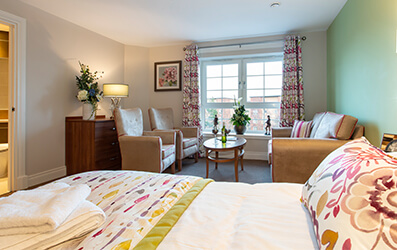
What’s included in my room? Lots of care homes will offer en-suite bedrooms for ultimate privacy and comfort, but it’s important not to assume. It’s also worth asking if televisions or radios are provided in every bedroom, and if there will be a telephone and internet access to keep you connected to loved ones.
How are meals prepared? Food is an important part of our wellbeing, so it’s worth asking to see a menu or even try a meal during your visit. An on-site chef is ideal, and residents should be provided a choice of meals from a set menu each day. A great care home will also listen to resident feedback and requests, make adjustments to meals if asked, and provide nutritious, seasonal dishes to vary diets and keep residents healthy and satisfied. Dietary requirements such as allergies, medical restrictions and preferences should be adhered to, and residents should also have access to snacks throughout the day.
What is the staff-to-resident ratio? This is a question that will depend on the type of care being given, but a good indicator is to look at the staff in the home. If they look stressed or are rushing between rooms, this will directly impact the quality of care and attention residents will be receiving. You could also ask about the home’s staff retention rate and to see a copy of their latest Care Inspectorate report, the independent body that monitors care homes in Scotland. (The English equivalent of this is the Care Quality Commission, or CQC)
Can I have a trial period? Most care homes will offer a trial period of around 4 weeks to experience what life will be like inside the home, before deciding to move in permanently. This can also be done with a respite care stay, if the home offers this.
The Best Care Homes
The best thing you can do when looking for a care home to move into is to visit the home. Arrange a tour with a home you are interested in and ask if you can stay for a while; this will give you the opportunity to observe the residents and see how staff are treating them.
Make sure the current residents are being treated with patience, respect and dignity and the staff are friendly and welcoming; you can even speak to some of the residents and their loved ones to get their opinion on the home. Overall, the feeling of a home is the most important factor, and if a home feels inviting and relaxing, you are far more likely to be comfortable living there.
Finding A Care Home
To find care homes in the location you would like to live, the easiest thing to do is look online. Search the internet for terms such as “Care Home in Glasgow” or “Nursing Home Near Me”. Comparison and review website such as carehome.co.uk show testimonials from real families of residents in a home, and can be a good window into what life is actually like in the home.
If you’re receiving funding through the council, they can give you a list of homes they will fund, but it’s important to make sure you’re completely happy with a care home. After all, you’re the one who will be living there so you should have the final say.
Bothwell Castle Care Home in Glasgow
We understand how difficult it is to choose the care home that it right for you, that's why the team at Bothwell Castle Care Home is here to help you with this huge decision. Get in touch with our care experts today to chat about what you're looking for in a care home and how we can help ensure you get the best quality of life you deserve.